
Know the product. Trust the handoff.
CyphrAuth gives each physical item a record that manufacturers, carriers, receivers, and owners can check as it moves. Verify identity, record inspection, confirm custody, and retain the history when something changes.
Trust, but verify through CyphrAuth.
Verify at receipt
Confirm custody at handoff
Retain exceptions and outcomes
The operating loop
One record. Five moments of accountability.
The record becomes useful when it answers the questions teams already ask: what is this item, what condition was it in, who accepted it, and what changed?
- 01
Register
Create a Product ID and protected Claim Code, then associate the item with the order, batch, or client context that matters.
- 02
Check
Scan the public Product ID before accepting, installing, servicing, or forwarding the item.
- 03
Inspect
Record label, packaging, and condition state while keeping operational notes out of the public result.
- 04
Handoff
Let the sender and receiver acknowledge custody without confusing possession with product ownership.
- 05
Resolve
Freeze, revoke, recover, or investigate the record while preserving what happened before the exception.
The evidence view
See the current state. Then see how it changed.
Authorized teams can review custody, accepted handoffs, product status, and retained history without placing Claim Codes or private owner information in the public result.
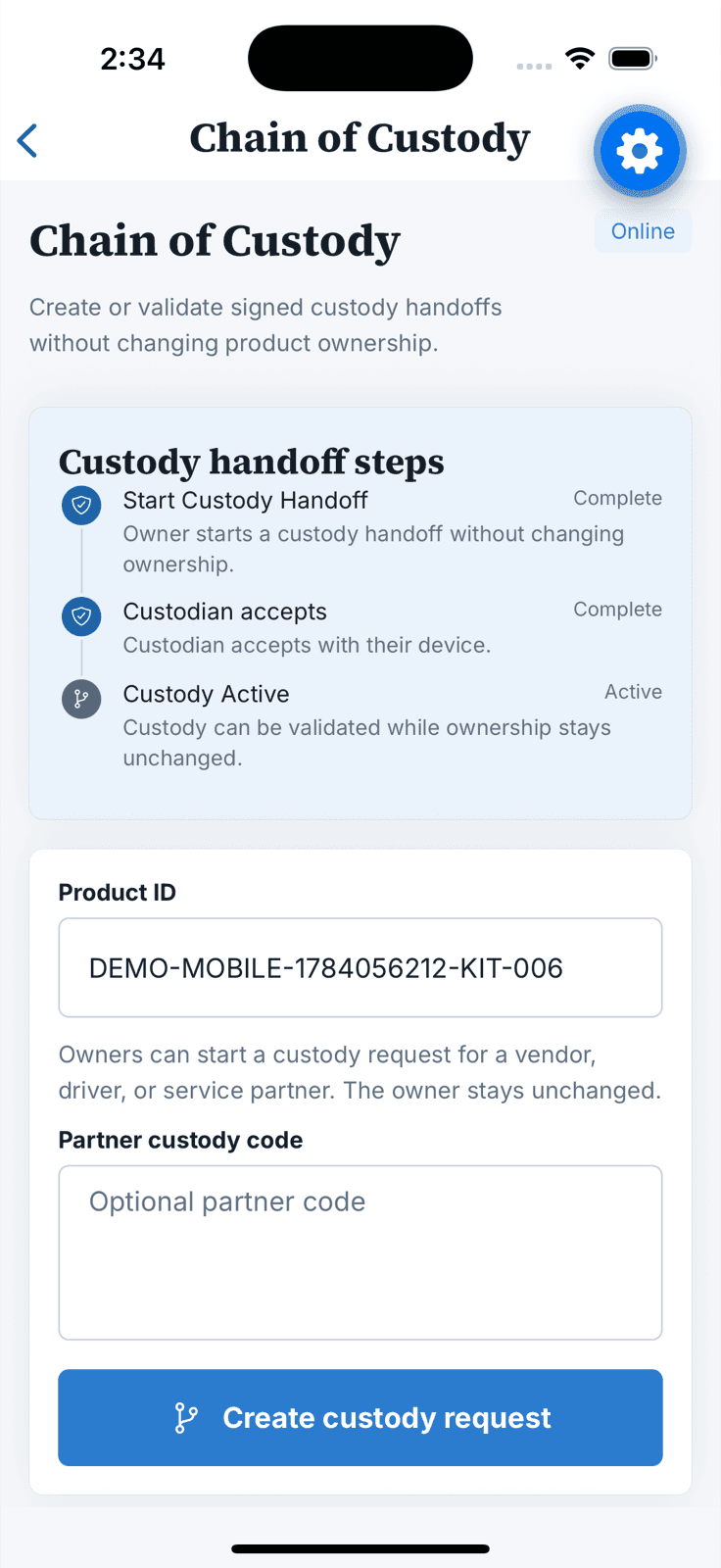
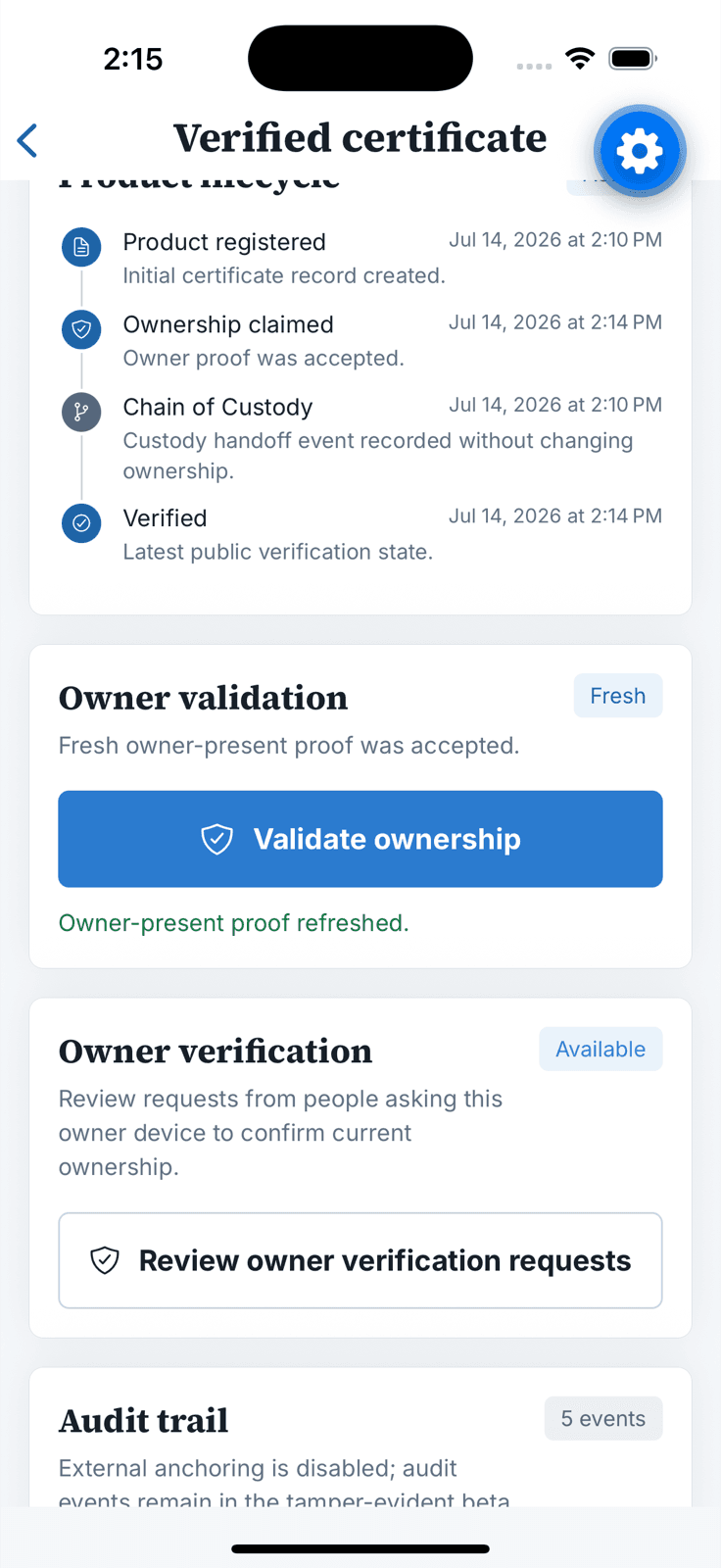
Shared record, distinct roles
Give each participant the proof they need.
The public result stays simple while authenticated actions remain specific to the manufacturer, carrier, receiver, or owner.
Manufacturers
Establish the product record and connect it to order, batch, and label activity.
Logistics operators
Confirm custody at each handoff and retain the accepted route history.
Receivers and buyers
Check product status and inspection state before accepting the item.
Owners and service teams
Carry service, resale, exception, and recovery decisions forward with the product.
Prove one route before connecting every system.
Start with one product class, a defined set of participants, and a handoff worth validating. Carrier, ERP, printer, sensor, and inspection integrations remain specific to the deployment.